
Glucosamine Sulfate 2KCl COA Guide: Key Quality Parameters Buyers Should Check
A rigorous audit manual for procurement heads, formulation chemists, and quality control specialists qualifying USP Grade Glucosamine Sulfate 2KCl with ≥99% purity.
Precision Specifications: Defining USP Grade Glucosamine Sulfate 2KCl
In the global joint health and dietary supplement market, Glucosamine Sulfate 2KCl (Potassium Chloride glucosamine sulfate) represents the benchmark for bioavailability and crystalline stability. Sourcing high-purity ingredients demands meticulous scrutiny beyond baseline commercial quotes.
| Critical Parameter | USP / EP Pharmacopeial Standard | Standard Test Methodology | Significance to Formulation & Stability |
|---|---|---|---|
| Assay Purity (Glucosamine Sulfate 2KCl) | 98.0% – 102.0% (Dry Basis, ~99% purity) | HPLC / Potentiometric Titration | Determines label claim compliance and therapeutic joint cartilage synthesis efficacy. |
| Loss on Drying (Moisture Content) | ≤ 0.50% Max | Vacuum Oven Drying at 105°C | Controls hygroscopicity, tablet caking, and prevents accelerated shelf-life degradation. |
| pH (5% Aqueous Solution) | 3.5 – 5.0 | Potentiometric pH Meter at 25°C | Directly impacts effervescent formulation, active synergy, and gastrointestinal tolerance. |
| Specific Optical Rotation [α]D | +51.5° to +54.5° | Polarimetry (c=10 in H2O) | Confirms stereospecific D-enantiomer configuration, preventing inactive racemate adulteration. |
| Potassium (K) Content | 12.5% – 13.5% | Atomic Absorption Spectrophotometry (AAS) / ICP-OES | Verifies proper stoichiometric 2KCl salt stabilization without excess unreacted salts. |
| Residue on Ignition (Sulfated Ash) | 26.5% – 29.0% | Muffle Furnace Ashing at 600°C | Quantifies total inorganic mineral matrix integrity and processing residual control. |
| Heavy Metals (Pb, As, Cd, Hg) | NMT 10 ppm (Individual: Pb≤0.5, As≤1.0, Cd≤0.5, Hg≤0.1 ppm) | ICP-MS (Inductively Coupled Plasma Mass Spectrometry) | Guarantees compliance with California Prop 65, USP <232>/<233>, and EU food safety law. |
Technical Clarification: The "2KCl" Stabilization Necessity
Pure glucosamine sulfate is notoriously hygroscopic and oxidizes rapidly into a brown paste when exposed to ambient moisture. By co-crystallizing glucosamine sulfate with potassium chloride at a stoichiometric ratio of 2:1 (yielding the compound (C6H14NO5)2SO4 • 2KCl), chemical stability is preserved without the cardiovascular sodium burden associated with 2NaCl preparations. Sourcing verified USP Grade material ensures this exact stoichiometric ratio is preserved without free potassium chloride diluents.
1. Which Assay, Moisture, pH, and Impurity Parameters Matter Most?
Analytical chemists and B2B buyers must prioritize critical quality attributes (CQAs) that govern physical blend performance, chemical stability, and global regulatory acceptance.
Assay & Stoichiometric Purity
Assay testing via validated High-Performance Liquid Chromatography (HPLC) paired with refractive index or UV derivatization is non-negotiable. Standard titrations can be spoofed by nitrogen-rich fillers or non-functional amino complexes.
- Target Range: 98.0% to 102.0% calculated on dry basis.
- 99% Purity Claim: Standard for premium dietary grade batches.
- Chiral Integrity: Specific optical rotation between +51.5° and +54.5° confirms bioactive D-glucosamine.
Loss on Drying (Moisture Content)
Moisture is the primary catalyst for Maillard browning reactions in amino sugars. Residual moisture accelerates hydrolytic cleavage of the sulfate bond, causing raw materials to form hard conglomerates during capsule filling or tableting.
- Strict Limit: ≤ 0.50% weight loss at 105°C.
- Formulation Risk: Moisture exceeding 0.7% leads to tablet mottling and dissolution failures.
- Packaging Requirement: Double-layer polyethylene liners with desiccant seals.
Solution pH & Clarity
A 5% aqueous solution test reflects chemical neutrality and crystalline salt stoichiometry. Deviations from the optimal 3.5 – 5.0 range point to unneutralized sulfuric acid residues or caustic washing byproducts during manufacturing synthesis.
- Acceptance Range: pH 3.5 to 5.0 at 20°C–25°C.
- Clarity & Color: Solution must remain crystal clear (≤ 1.0 NTU turbidity) and colorless.
- Impact: In acidic RTD functional beverages, balanced pH prevents protein precipitation.
Heavy Metals & Elemental Impurities (USP <232>/<233>)
Because maritime crustacean shells (shrimp, crab chitin) are standard source precursors, marine bioaccumulation presents real risks of heavy metal contamination. Advanced quality documentation must detail specific ICP-MS breakdown rather than a generic "Pass <10ppm" statement:
- Lead (Pb): ≤ 0.5 ppm — Strict safety compliance for infant or senior joint therapies.
- Arsenic (As): ≤ 1.0 ppm — Critical threshold for North American & European markets.
- Cadmium (Cd) & Mercury (Hg): ≤ 0.5 ppm and ≤ 0.1 ppm respectively.
Residual Solvents & Microbial Profiles
Crystallization and purification protocols involve solvents such as ethanol or isopropanol. Pharmacopeial guidelines (USP <467>) strictly regulate volatile organic chemicals to safeguard end-consumers:
- Organic Solvents: Ethanol ≤ 5,000 ppm (Class 3), Methanol ≤ 3,000 ppm (Class 2).
- Total Aerobic Microbial Count (TAMC): ≤ 1,000 CFU/g.
- Total Combined Yeasts and Molds (TYMC): ≤ 100 CFU/g.
- Pathogenic Pathogens: E. coli, Salmonella, and Staphylococcus aureus absent in 10g/25g.
2. How Should Procurement & QC Teams Audit a COA?
A Certificate of Analysis (COA) is a legally binding quality declaration. Reviewing it is not a perfunctory box-checking exercise; it requires a systematic, four-layer validation strategy.
Step 1: Batch Traceability & Date Logic
Examine the document header for complete production metadata. Verify that the batch number corresponds directly with physical packaging markings, shipping bills of lading, and internal lot logs.
- Validate that the Retest / Expiry Date does not exceed 24 to 36 months from manufacture.
- Confirm the plant address matches the supplier's audited cGMP site registration.
- Check that the manufacturing date aligns logically with raw material shipping timelines.
Step 2: Actual Values vs. "Conforms" Flags
A major red flag on any supplier COA is the recurrent use of "Conforms" or "Pass" instead of exact numerical values for quantitative analytical parameters.
- Assay: Demands an exact number (e.g., "99.4%"), never a blanket "Conforms".
- Heavy Metals: Must state exact instrument findings (e.g., "Pb: 0.12 ppm; As: 0.08 ppm").
- Moisture: An exact percentage (e.g., "0.28%") demonstrates authentic testing.
Step 3: Verification of Test Methodologies
Specifications without clear analytical test methods lack legal and regulatory enforceability. Match test citations on the COA with compendial monographs (USP, EP, FCC).
- Ensure the assay is designated by HPLC or compendial titration rather than nonspecific loss-on-drying math.
- Confirm heavy metal quantification specifies ICP-MS or AAS rather than obsolete colorimetric sulfide methods.
- Check for explicit QA/QC Manager electronic sign-offs and accredited lab seal stamps.
Audit Red Flags: When to Reject a COA
Reject a COA immediately if you observe: 1) Mismatched font types or cut-and-paste digital signatures indicating altered PDF files; 2) A generic test method column listed merely as "In-House" without standard operating procedure (SOP) references; 3) Repetitive analytical numbers identical down to two decimals across different lots produced months apart; or 4) Absence of clear origin declarations regarding marine crustacean sourcing vs. bio-fermentation vegan processing.
3. Which Documents Should Buyers Request Before Bulk Purchasing?
A COA is only one element of a full vendor qualification file. Sourcing raw materials for commercial formulation requires a comprehensive compliance dossier to satisfy cGMP audits (FDA 21 CFR Part 111/117, EU Annex 1).
Certificate of Analysis (COA) - Batch Specific
A representative pre-shipment COA corresponding precisely to the production lot being purchased. Never accept a "typical" or generic specification sheet in lieu of a real, batch-tested COA.
Technical Data Sheet (TDS)
Provides complete physicochemical profiles: bulk density, tapped density, particle size distribution (mesh pass-through rate, e.g., 95% through 80 mesh), crystal morphology, solubility limits, and exact shelf-life storage guidelines.
Safety Data Sheet (MSDS / SDS - GHS Compliant)
An OSHA/GHS compliant 16-section MSDS detailing occupational toxicity, personal protective equipment (PPE) requirements, spill containment handling, explosion mitigation parameters, and transport hazard classifications.
cGMP & ISO Certification Credentials
Current third-party audited plant certifications (ISO 9001, ISO 22000, FSSC 22000, or cGMP compliance certifications). Confirms manufacturing continuity, validation master plans, and batch tracing controls.
Allergen, GMO, & Origin Declarations
Clear declarations of crustacean allergen status (vital for cross-contact control in blending plants), Non-GMO verification, and raw material origin. Vegan-grade non-animal certificates must be provided if fermented.
BSE/TSE, Halal & Kosher Certification
BSE/TSE-free attestation proving absence of ruminant contamination risks in processing equipment, alongside authentic Halal and Kosher compliance certificates needed for diverse retail market access.

2002
Established InAbout Us
Welcome to learn about our company
Shaanxi ShineHerb Biotech Co., Ltd. is a professional enterprise engaged in the research, production, and exports of Enzyme preparations, Natural plant extracts, Vitamins, Amino acids, and Pharmaceutical intermediates. We are committed to providing global customers with competitive pricing, stable and reliable product quality, and professional, efficient services.
With over 20 years of experience in the raw materials industry, ShineHerb Biotech continues to strengthen its technical capabilities and improve product quality. Our main products include Lactase, Bromelain, Pancreatin, Papain, Quercetin, N-Acetyl-L-Cysteine (NAC), PQQ, and Glucosamine Sulfate 2KCL, among others. These ingredients are widely used in pharmaceuticals, dietary supplements, beverages, cosmetics, and food additives.
At present, our products are exported to more than 50 countries and regions, including Europe, North America, and Southeast Asia, and have gained wide recognition and trust from customers worldwide.
Our Advantage
Reliable raw material procurement requires end-to-end operational visibility. ShineHerb Biotech guarantees pharmaceutical-level supply consistency through three core pillars.

Rigorous Quality Control
Quality is the core of a company’s survival and development. ShineHerb Biotech has established a strict quality management system, covering raw material inspection, production process control, solvent and excipient management, and final product testing, ensuring rigorous quality control at every stage.
Dedicated Technical Support
Our experienced R&D team and technical specialists provide full formulation guidance, dissolution troubleshooting, and regulatory documentation dossiers (COA, TDS, MSDS) to ensure seamless formulation integration and swift audit approval.

GMP Requirements Compliance
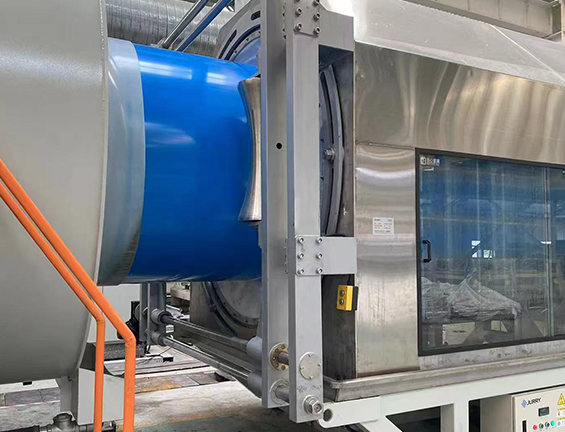
Operating under stringent GMP facilities, ShineHerb maintains total air filtration, automated closed-loop synthesis systems, and validated water systems, safeguarding every batch of Glucosamine Sulfate 2KCl against microbial and cross-batch contamination.
Frequently Asked Questions by Formulation Teams
Expert answers addressing the practical formulation, storage, and regulatory questions surrounding Glucosamine Sulfate 2KCl.
Why choose 2KCl over 2NaCl Glucosamine Sulfate?
Glucosamine Sulfate stabilized with Sodium Chloride (2NaCl) introduces substantial sodium content into the formulation. For senior demographics targeted by joint-health formulations, excess dietary sodium elevates cardiovascular hypertension concerns. The 2KCl form replaces sodium with essential potassium, aligning with clean, cardiovascular-conscious product positioning.
What packaging standard prevents caking during sea freight?
Glucosamine Sulfate 2KCl is hygroscopic. For trans-oceanic container transport, ShineHerb employs a triple barrier: food-grade double polyethylene inner bags, vacuum heat-sealed with food-grade molecular sieve desiccants, housed inside high-density 25kg fiber drums. This prevents clumping when containers cross variable humidity and temperature zones.
Can Glucosamine Sulfate 2KCl achieve true 99% purity?
Yes. By utilizing precision recrystallization processes and high-efficiency centrifugal washing, ShineHerb produces USP Grade Glucosamine Sulfate 2KCl testing consistently between 99.0% and 100.8% assay purity on a dried basis, with residual chloride and potassium balances perfectly matching theoretical stoichiometric requirements.
What is the recommended testing schedule for incoming QC?
We recommend a standard incoming inspection testing assay (HPLC), loss on drying (moisture), and solution pH upon arrival. Retaining a reference sample from each container composite verifies that shipping conditions have not altered bulk density or particle distribution prior to dispensing into the batch tank.
Secure Batch-Certified Glucosamine Sulfate 2KCl
Mitigate sourcing risk with direct-from-manufacturer verification. Connect with ShineHerb's technical sales team to receive current batch-specific documentation, analytical HPLC chromatograms, complete regulatory dossiers, and competitive volume quotations.