



Why Bromelain Enzyme Is Gaining Attention in Supplement Formulations
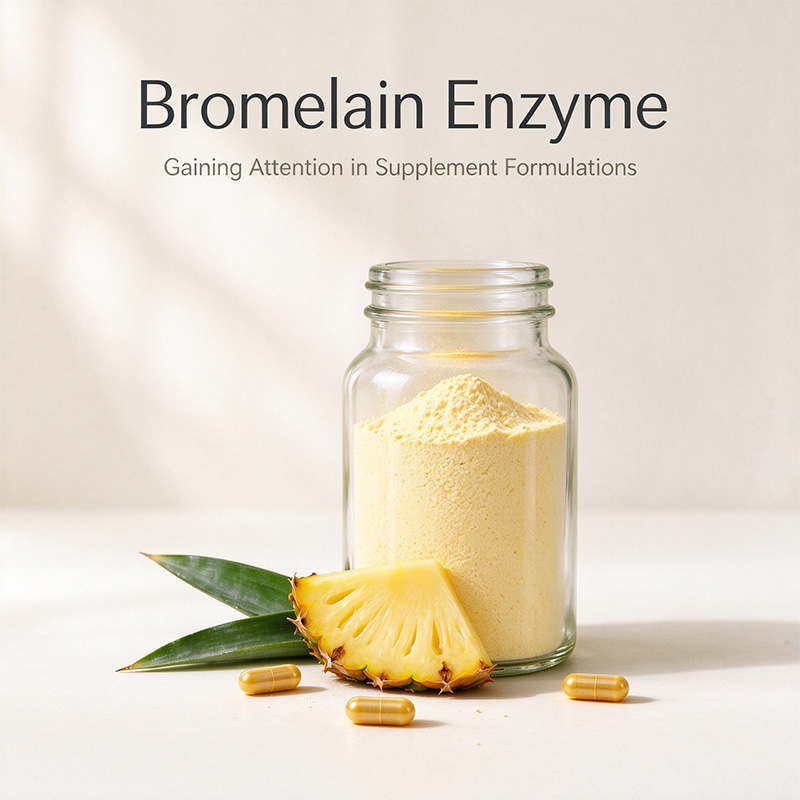
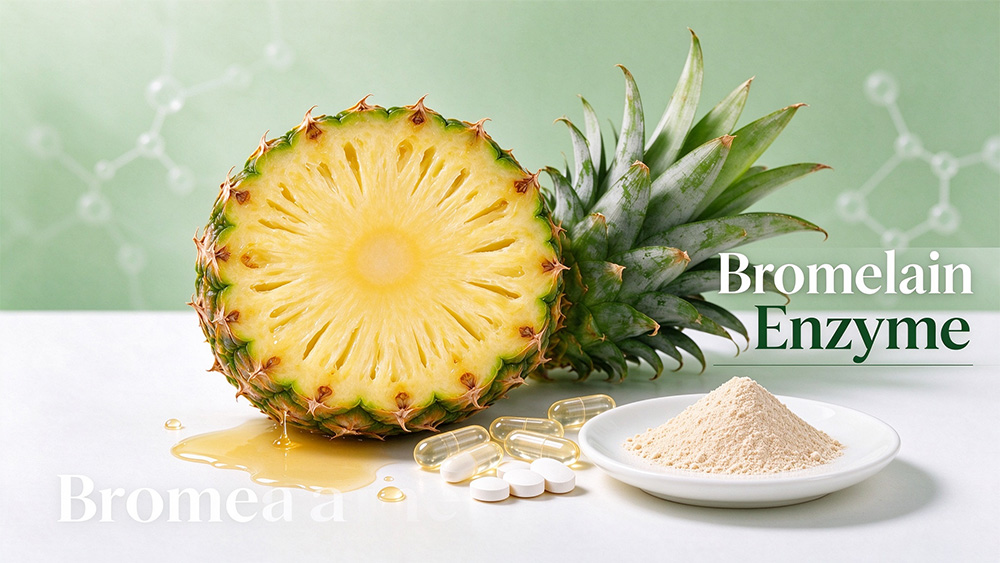
Bromelain is a natural proteolytic enzyme extracted from pineapple stems. As a member of the cysteine protease family, it breaks down proteins into peptides and amino acids, making it a widely used functional enzyme ingredient in food, nutritional products, and dietary supplements. Besides supporting protein digestion, bromelain is also valued for its role in helping maintain a healthy inflammatory response and supporting joint comfort.
Growing Interest in Enzyme-Based Ingredients
Enzyme-based ingredients are receiving more attention from supplement formulators because they can add specific functional properties to a formulation without making the ingredient list unnecessarily complex. Bromelain is one of the enzymes commonly considered for dietary supplement products, particularly in formulations where proteolytic enzyme activity is required. For manufacturers, factors such as enzyme activity, stability, dosage form, and compatibility with other ingredients are important when evaluating bromelain for a new product.
Flexible Use in Different Supplement Formats
Bromelain can be used in a range of supplement formats, including capsules, tablets, powders, and multi-enzyme formulations. This flexibility makes it easier for manufacturers to include bromelain in different product concepts and dosage forms.
Different Activity Levels for Different Formulation Needs
Bromelain is available in different activity levels to meet different formulation requirements. For example, refined bromelain can be supplied at 500,000 U/g, 800,000 U/g, and 1,200,000 U/g. The right activity depends on the formulation, dosage, and intended application.
Bromelain works well across most supplement formats. On its own, it is sold as a single-ingredient enzyme with a set activity level, so it is easy to dose and label. In multi-enzyme blends, it teams up with other enzymes like protease, papain, and amylase to cover different digestive functions. As a powder, it handles cleanly in capsules and tablets, thanks to good flowability and stability, and it also fits powder formulas such as scoopable digestive mixes.
- Consistent enzyme activity: Stable activity between batches prevents performance drift and keeps dosing reliable.
- Clear testing methods: Repeatable, well-defined testing methods verify enzyme activity on every batch.
- Complete documentation: COA, MSDS, and specification sheets help manufacturers meet quality and regulatory requirements.
- Stable supply: Reliable supply for bulk orders avoids delays and shortages that disrupt production.
- Proper packaging and storage: Correct packaging and storage protect enzyme potency during transit and shelf life.
Bottom line: Working with a dependable bromelain enzyme supplier gives manufacturers consistent quality, complete documentation, and a steady supply for safe, compliant products.
When choosing a bromelain supplier, buyers should check:
Enzyme activity: Confirm activity levels such as 500,000, 800,000, or 1,200,000 U/g and the test method.
Quality documents: Request COA, TDS, and MSDS.
Product consistency: Check batch-to-batch quality and testing results.
Supply capacity: Confirm MOQ, lead time, and long-term supply capability.
Sample quality: Test a sample before placing a bulk order.
Price vs. value: Compare activity, dosage, quality, and total cost—not just USD/kg.
ShineHerb is an enzyme raw material supplier with 20 years of experience. If you are interested in bromelain, feel free to contact us—we'd be glad to provide more information and technical support.
E-mail: sales@sxshine.com Whatsapp: +86 13324591225